Mindful Medicine Worldwide

A few weeks ago (wow, time flies by fast!), a woman came to our school to talk about an organization she founded call Mindful Medicine Worldwide. It’s an organization that’s setting up integrative clinics all over the world, and they also require of their volunteers to engage in a mindfulness practice of some sort (which personally I think is really awesome).

One of the unique thing about this organization is that volunteers don’t have to pay to participate. Some organizations (like Acupuncturists without Borders) require a large donation from people who want to donate their time, this really limits who is able to participate. They do require participants to cover the cost of airfare and fundraise for medical supplies (fair enough, and they match the money you raise).

I mostly just wanted to spread the word about this organization. It’s an opportunity I hope to one day participate in.

Acupuncture and Herbs…

or Herbs and Acupuncture?

Acupuncture and Herbs are two different Chinese healing modalities. They are based in the same fundamental theory and grow out of the same foundational ideas, but they were not necessarily always practiced by the same people, and require a different set of skills and knowledge. They can both heal a number of conditions, but in different ways.

I personally was attracted to Chinese medicine because of acupuncture and my personal experiences with it. I am a very hands-on person and love massage and touch. Initially, I was planning on going to a school that teaches only acupuncture because of a philosophical belief that one should master one medicine before learning a second. But, for better or worse (I think better) that is no longer the case. I still have the option of learning them sequentially, but I’ve been hearing from the school’s faculty and from some senior students to go ahead and learn it all at once. While I’ve heard plenty of practitioners who use only acupuncture say they don’t need herbs, I’ve also heard practitioners say they can’t imagine treatment without herbs (I’ve even had one student tell me that her perception is that those that learn acupuncture without herbs are not as good at acupuncture).

Now, I also tend to be the kind of person who wants to do it all at once, and while I was attracted to Chinese medicine because of acupuncture and the physical touch elements involved, I was coming from a background of ecology. My love of nature and of the plant and animal world is deep, and any opportunity to learn more and connect in new ways to the natural world is one I’m eager to pursue. This semester I’m taking my first herbs course (required for all students regardless of whether or not they’ll be studying herbs further down the road), and I’ve fallen in love. I am super excited about learning more, and about getting to know as many of the herbs as possible on a personal level by growing them (if anyone knows of seed suppliers please inform me, I have a few leads on some sources in North Carolina and upstate New York and will happily share more information as soon as it’s confirmed). I’ve also experienced first-hand the healing power of some of the herbal formulas (specifically a formula called Shao Yao San) and want to be able to share that with patients.

Which leads me to the next point of contemplation: will I end up using herbs therapeutically? While they are powerful healers, patient compliance is not always the highest (they’re often inconvenient to take, or taste bad), and they add an expense to any treatment (which isn’t an option for all patients), and depending on where I end up living and practicing, they might not be easily accessible.

Doing herbs with the Acupuncture program means 2 more semester, a fair amount more debt (which I plan on discussing in a future post), and most importantly a potential that I’ll be missing a little from both (the human brain can only absorb so much information at a time, right?). One thing I’ve noticed so far is that I’m spending a lot more time studying herbs than I am studying my acupuncture points. Part of that has to do with how my memory works, and I just happen to be able to get points right away, but I wonder what things will look like down the road.

There’s another little conundrum hiding it’s face amongst all these contemplations regarding my ability to take classes in the Classical Chinese Medicine while doing the full Traditional Chinese Medicine program, but I won’t go into that right now.

So there’s one of the many many things that’s been on my mind regarding my studies, As always, I’m open to hearing people’s thoughts, opinions, and ideas.

Shine on, and drink some dandelion tea to help heal the world (more on this soon enough).

My Latest Realization…

I realized this week, once on my own and then again thanks to a teacher, that becoming an acupuncturist is really serious business. I think for the most part, Acupuncture and Chinese medicine are seen as “alternative” or supplemental, which to some degree implies (at least in my mind) a certain level of casualness to it. “Real problems” are dealt with by Doctors, us acupuncturists help out with everything else (or when Doctors fail).

What I came  to understand is that people might come in with digestive issues, lower back pains, or a headaches, thinking it’s a minor issue and actually have stomach cancer or a brain tumor. It’s my responsibility as healthcare practitioner to be able to tell the difference between A and B and know when to refer.

Now, in New York we’re not considered primary healtchare providers (even though there might be a few people out there who come to us in that capacity), but in a state like California, acupuncturists are. Fortunately, I’m going to the one school on the East coast, that educates us at the California level, meaning I feel confident that my school will give me the knowledge and experience that I need to perform my duties for my patients (it explains our multiple Western medical classes, which I personally now look forward too).

All of that said, it was a sobering realization, better to be had sooner than later, and better to end a realization that this is a responsibility I am willing and able to step up to.

Memorizing

A huge part of being in medical school (Chinese or Western) is memorization. It’s unavoidable. Every week, tons of information is thrown at us, and we are responsible to absorb and assimilate it, and to have rapid recall. Fortunately, our brains are powerful, and only get stronger with exercise. For better or worse, memorization requires repetition and focus, however, it probably takes less concentrated time than we expect.

Okay, everyone’s mind works differently, so I guess I can’t speak for everyone, but I can speak from my own experience, and from what I’ve learned from others (like Cal Newport). I find that generally speaking, sitting down for a four hour study session, is far less effective than running through my notes 2 or 3 times over the course of the day and reviewing them. This is especially effective in the morning, and right before you go to bed.

It also really really helpful to have a good understanding of how your brain works and what type of learner you are. Many of us are visual learners, some of us are audio learners or kinesthetic learners. I find that movement and speaking out loud is really helpful for me. I don’t really feel comfortable with the material until I’m able to explain it to someone else (this is slightly problematic with boring material that’s less relevant to people who aren’t studying Chinese Medicine). If I can speak it out to someone, I know I know it.

And don’t forget about acronyms…

More about memorizing and study techniques later (now I have to get back to studying, hehe).

I’d love to hear about tactics you apply…

Mental Illness and Culture

I’m having an incredible second week of my second semester! My classes are really great as are all of my teachers and I’m super stoked. That said, the way I have all my classes stacked, and due to the fact that this semester’s course-load is a little heavier, I can tell I’m in for a challenge, a challenge I’m totally up for.

I’ll go more into detail about school soon. For now, I wanted to strongly recommend reading “The Americanization of Mental Illness” an article in the New York Times about how our cultural expectations affect the expression of disease and how globalization of ideas is affecting mental health world-wide. I’d love to hear comments anyone might have. Mental health is an interest of mine (as part of all health within a holistic model in which the mind and body exist on a continuum) and I plan to discuss Chinese Medicine and its capacity to benefit mental health here on this blog.

Now I have to make sure I’m getting enough sleep to absorb and retain all of the delicious information and experiences coming my way…

It’s good to be back…

I just got back to New York after two blissful weeks of vacation in North Carolina and Virginia with loved ones. It was an incredible and much needed retreat from the city which was not only rejuvenating, but also illuminating. That in the darkness of winter I continue to find light is a blessing I am truly grateful for.

Yes, I want to share my latest meditations on health from break, but first I must report on today.

My first day back, and my first day as an Observer in the clinic. This is what it’s all about and why I’m here. Talk about a way to start the semester! I’m shadowing a really wonderful Intern with a very sweet Supervisor and learning an incredible amount.  It feels really really wonderful to becoming a part of the healing process of individuals. Of course my seniors were sure to let me know that they were jaded and stressed, but it didn’t matter, I reveled in every detail, every question, and each gentle movement of a pulse under my fingers.

In my first Herbology class this evening I became acutely aware of the fact that herbology is a different medicine from acupuncture. Why or how I can’t yet explain, and while it’s clearly complimentary and equally powerful medicine, I do believe that it is its own animal. I’ve been constantly teetering back and forth between wanting to study Classical acupuncture first and then learn herbs afterwards, and doing to TCM program that includes both. I still haven’t come to a final decision, but it does feel clear to me that I want to learn both and that they are both different. Everyone has an opinion, I appreciate and respect and enjoy hearing opinions (and would love to hear more). I’ve come to understand that there is no wrong or right answer, only one that will work for me.

I must go for now, hopefully in the next weeks I’ll make up for the past weeks of silence, in the meantime, Happy New Year and start meditating on what health means to you, because that is going to be one of my upcoming topics and I’m going to need some participation…

Quick Update…

Finals are right around the corner and I’ve got a paper to write, and to be perfectly honest I’m pretty grounded and unstressed. I feel like I have strong footing with the material, and mostly it’s just a matter of reviewing and refreshing. That said, I am a little behind on that paper.

I just wanted to say hello! I’m determined to maintain this blog and keep it updated. I can let everyone know that I have a bunch of ideas up my sleeves that I’m looking forward to sharing in the near future. I have a feeling this winter break I’ll get a bunch of writing done.

In the meantime, stay warm, and well nourished (body and spirit!).

Presence and Patience

I’ve been noticing lately that the story I’ve been telling myself and others is one of eagerness to move forward. I want to start learning points and needling, I want to get more hands on experience, to be able to help people heal with Chinese Medicine. Eagerness is great, however the impatient aspect of eagerness can be less good, it can lead to frustration and disinterest in the present.

So I’m practicing a few exercises to continuously bring myself back to the present. I’m using my breath, my senses, and my posture. Throughout the day, I’ll have moment where I catch myself slouching, or holding my shoulders up, and I’ll sit up strait and relax my shoulders. Other times, I realize that I’m so wrapped up in my thoughts (I have a tendency to be up in my head), so I bring my attention down lower in my body, my pelvis and legs, and I breath down into my belly and let myself focus on my breath for a bit. One of my favorite practices is sending my attention to my senses. Once again, I notice all of attention and awareness focused on my thoughts or internal feelings, so I bring my attention outward to my skin, ears, eyes, and nose. It always amazes me how much is going on around me, how beautiful the people and sounds and colors can be, if I only remember to take the moments and appreciate them.

These exercises are particularly appropriate for the Fall. The Fall is associate with the Metal phase (or element) (I plan to discuss the 5 phases/elements and how they fit into Chinese Medicine in the near future), which is related to the Lungs and to our superficial and sensual experience of the world. The Lungs, which are our barrier with the outside world (we breath the outside in) are also responsible for and reflected in the skin and it’s health (many skin ailments are connected to the Lungs which is why often diseases like asthma and eczema go together).

Bringing awareness to the surface of our body, our sensation the outside world, and/or focusing on our breath is a good way to balance where our energy is directed (in our modern world we tend to spend a lot of time in our heads, and not as much time in our bodies).

My hope is that these exercise will help bring me back to appreciating the present. If’ I’m using my energy to appreciate the present I won’t have any time or energy to be impatient. I may still be eager to continue to learn and grow my knowledge and skill-base, but I’ll also be enjoying where I am.

Thoughts? Comments? Try it, let me know if it helps…


Life, School, Stress, and Feeling Good

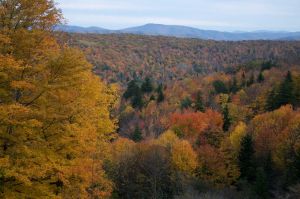
Fall Colors of the Alleghany Mountains of Virginia

Fall Colors of the Alleghany Mountains of Virginia

As the Fall begins to sink its fingers into the Northeast with cooler weather, shorter days, and some crazy wind we’re moving into more complicated material and through an intense midterm period. I managed to get out the city a couple of weekends ago, which was incredibly important for my health (though by now some of the therapeutic effects unfortunately seem to be waning). My girlfriend and I drove down to the Allegheny Mountains of Virginia. We were lucky to have perfect timing and were there for peak colors (the trees turn earlier in the mountains, despite the latitude) and even saw a Bald Eagle!

Now, I find myself working harder than I’ve had to in a while, as my two part-time jobs are demanding much more from me. I have two part-time jobs because I want to make it through school with minimal debt and because I want to continue to cultivate myself beyond the boundaries of Chinese Medicine. I’m working as an environmental educator for an organization called The Wild Lab. It’s an awesome organization and our program is super-cool. Essentially, we’re using an iPhone application to teach students about birds and about citizen science. My other part-time job, which is currently only a couple of weekends a month, involves care for adults with mental disabilities. I’m currently skipping my daytime classes to attend a course that will certify me to administer medications (I’ve still managed to make it to my evening classes, both of which involved quizes this week), the course is a New York State specific thing.

All that said, I did want to hop online, write a little update, remind myself and the world about the realities of being a student, and share briefly an experience that has me thinking more about health and what it does and/or doesn’t mean, and how we regulate our health.

Last night, I was feeling very stressed out, a bit overwhelmed by the number of things on my plate (tasty as those things may be). I was tired, and having trouble finding the energy,desire, or focus, to do anything, but zone out (something I clearly needed to do). To create more context I had gotten very little sleep the previous night, and eaten crappy food that day. Today, I’ve been feeling much better, and in fact came home excited to work on flashcards and memorizing all of these medications and what they’re prescribed for, because learning is awesome (of course I had to write first). Last night I got to bed at a decent time, and today, I think I ate stuff that my system was more happy with.

Nothing external really changed all that much. I still have 3 midterms on Monday, and my first day teaching in the classroom on Tuesday, and I’m still working part of this weekend. But I’m feeling better, and therefore more able to cope with the challenges I face. Now, we all have ups and downs, that’s natural. We have to balance the energized Yang periods of our days and weeks with restorative restful Yin periods of time. But I’m wondering about how we feel within those moments, and who or what’s in control of when and where they occur. I don’t have answers, and I think the answers are different for everyone, but the only way to find the answers is to be aware and observe ourselves and pay attention to what’s affecting us and how.

For the record, personally, I’m examining specifically which foods do what to my body and state of mind, and have been learning a lot about nutrition from a Chinese medical point of view, and hope, at some point, to have a series of food and nutrition related posts (hehe, though I’m sure we’re all sick of different people telling us what and how to eat – which is a whole other topic I plan on exploring).

So, let’s all try to pay attention to what makes us feel good, and what makes us feel not so good… and let’s try to do more things that make us feel Good 🙂

And now… off to the books.

Questions? Comments? Thoughts?

This American Life: More is Less

As I move deeper into the semester I seem to only get busier. I recently heard on the radio a great discussion about the Healthcare System in America (This American Life: More is Less). The show really delves into some of the underlying problems within the American Healthcare system, specifically with an eye towards the question of why it’s so costly. One story looks at the doctors, one at the patients and one at the insurance industry.

Really worth listening too, and there will be a follow-up show next week, so keep your ears peeled.

This American Life: More is Less

Quick Update and Great Resources!

School is going really well, still mostly just learning the basics, but a firm foundation is essential.

I am in the midst of working on a post about different practice options (private practice, hospitals, community acupuncture) and thanks to Yael Ernst of Chinese Medicine Notes I came across a great  blog with tons of business advice for alternative healthcare practitioners called Alternative Health Practice. I wanted to go ahead and get the word out there.

It’s encouraging to learn about all the easily accessible resources there are for anyone who puts forth some effort to look. I also realized, that I’ve become aware of a few tricks to become more efficient in my searches and even more importantly, to have the information come to me! I’ll be sharing some of those insights soon enough as well.

In the meantime, it’s back to the books.

Why I chose PCOM (or How PCOM chose me)?

Once I decided I wanted to start my journey to become a Chinese Medicine practitioner, I had to figure out which school to go to. Fortunately, I had experience picking out schools from my undergrad years, and I’d say the first step this time around was to talk to people.

What became apparent was that there are a few different styles of acupuncture and some school focused on a specific style,  so it was important to know which style resonated with me.  Location would also be a key factor, as would the scheduling (many schools offer classes on the weekends and/or evenings to allow people to work part/full-time) and of course the overall vibe of the school.

I immediately narrowed my search down to the Northeast, specifically Boston and New York City (I did look at some other schools around the Northeast) mainly because I didn’t feel like it made any sense for me to uproot myself and go somewhere I had no established connections, I’ve done enough of that in my life, at some point I might be ready for it again, but not yet.

Boston has one really great school, NYC had three. I slowly realized that I wasn’t really going to leave Brooklyn so soon (I’m part of a very supportive and nourishing community here) so I had three options: Pacific College of Oriental Medicine (PCOM), Tri-state, and the Swedish Institute.

PCOM  is the largest of the three, which potentially means that they have the most resources. It’s also the most expensive. It offers the most schedule flexibility. PCOM was also a strictly TCM school, with a strong emphasis on herbs. My initial vibes from the open house weren’t all that positive. I felt like it was a good school, that would teach me acupuncture, but that maybe it lacked some umph, some spirit. It felt very matter-of-fact.

Tri-State totally wowed me at their open house, though I was already somewhat more inclined towards Tri-state. They offer a unique 3-tier curriculum where you learn TCM, Japanese style acupuncture, and a European French Meridian System/American style. The idea being that more styles equals more tools and different patients will respond better to different types of treatments. Alumni I spoke with were very happy with their education there. Tri-state also offers a very hands on curriculum with palpating from day one and needling within the first trimester. Their schedule is set, and is pretty solid. Classes are mostly on the weekends, with a couple core classes on Monday and Wednesday(?) evenings. I left the open house feeling unsure whether I was wowed by quality or by charisma, and unsure about having so much class time on the weekends

Then there was the Swedish Institute. It seemed somewhat hard to get a hold of anyone and hard to get answers. Their focus was clearly on massage. Their acupuncture was unique because it had a Classical focus. The Dean, Jeffrey Yuen, is a well known leader in the field of Classical Chinese medicine and as an ordained Daoist priest in the 88th generation of the Jade Purity School he brings a lot to the table. I had heard a lot about him, and felt very drawn to the Classical approach. It sounded like I would be go deeper into the medicine. He spoke at the open house, and while he was speaking I just felt in my gut that I needed to go there. It was a surprising experience because I generally think of someone who makes decisions very intellectually, based upon methodical thinking and analysis, but here I was feeling a very strong gut feeling of “this is where I need to be.”

To make an already long story short, Jeffrey Yuen has moved to PCOM. So, I moved to PCOM, which now offers 3 programs: a 4-year Masters in Oriental Medicine (MSTOM), a 3-year Classical Chinese Medicine (CCM) program, and a different 3-year acupuncture program I don’t quite understand much about. I’m planning to go down the CCM path, which doesn’t include the herbs (the Classical approach is that you should first develop your skills as an acupuncturist and later learn herbs which originally evolved as separate medicines). I do plan on learning herbs shortly after I’m done with the program because I understand that they’re very powerful. Fortunately, we don’t have to make any final decisions until after our second semester, after we all take Herbs 1, but I’m pretty comfortable and confident with my decision. Interestingly enough, I feel like PCOM strongly stresses MSTOM program, largely because it’s the only program that certifies you to practice in California which has its own higher level of requirements for licensure. It’s like they expect us all to want to move to California at some point for some reason.

So that’s how and why I’m at PCOM. I’m happy there so far, and I think that bringing the CCM program to PCOM will be beneficial to everyone and so far am happy with my experiences there.

Let me know if you have any questions, comments, or want to share about your decision to be at whichever you’re school at!
Stories…

After an interesting weekend Rosh Hashanah (Jewish New Year) celebration I was excited to get back to school today.

In my clinical counseling class, we’ll be discussing a lot about how to hold space for patients, how to listen and engage patients in a therapeutic way, and we’ll learn when and where and how to suggest other therapy options.

Today in class we shared our stories with each other, first in pairs, then in small groups and then with the whole class. I LOVE stories, I think part of why I’m going in to this field is to hear people’s stories (something I don’t think I realized until now). I think our personal narrative is tremendously powerful in shaping our lives, and knowing that we have control over that narrative is probably one of first steps to affect change in our lives. This is why stories are so important, listening to stories, hearing stories, and telling stories (our own or those of others) to me are sources of a tremendous amount of potential power.

One of my classmates mentioned that she came to study Chinese medicine after coming to an understanding of how our emotions affect our bodies through her experience acting. She was saying she wants to help people better understand the story their body is telling, and help them change their story to a more positive one through healing. Once we understand how our story affects our health, we can try to understand our story, and look for what changes we want to make.

Consider this an introduction to a theme I hope to further explore. Please feel free to share a story and maybe over the next few days try to be aware of how you tell stories when you do. Which events do you highlight? Which interactions do you leave out? How do you tell the same story differently to different people? (While you’re at it, pay closer attention to the stories of those close to you, and how and what they tell).

Feel free to share experiences!

Chinese Medicine old and new

I wanted to write a brief post about what acupuncture is today and how it became what it is. This is going to be part of a larger conversation that I’ll inevitably be having regarding the many styles of acupuncture. This all mostly comes in light of me having all these ideas for posts, but feeling like some background was necessary (for instance, why and how I chose Pacific College was based a lot on what they teach and how they teach it, which needs context).

Before I start I just wanted to say that anyone interested in understanding how Chinese medicine works, or learning more about the history should definitely consider reading The Web that has no Weaver. Ted Kaptchuck does a much better job than I will.

Chinese medicine is well over 2,00o years old. How old exactly or where or how it started no one knows; there are bunch of theories and some are rather far fetched, ultimately what matters is that we have a tremendous amount of wisdom and an incredibly powerful method for healing.

What we do know is what Chinese medicine looks like today, and we have a reasonably good idea as to how it came to look this way. In 1911 the Chinese government banned its own traditional medicine as part of its effort to modernize. They really wanted get rid of the old mythical or folklorish superstitious nonsense. But, in the 1950’s the nation faced a healthcare crisis (hmmm…that sounds familiar) and needed a cost-effective way to treat the masses. The government realized that their own traditional medicine could potentially be the solution (hmmm…) and also felt like it could serve as a way of instilling national pride. So the government collected many of the best physicians and compiled what is now known as Traditional Chinese Medicine (TCM).

There are other styles out there and I think it’s probably helpful to know as a patient or a student the different types of acupuncture out there and what you’ll be getting; not that one necessarily works better than the other, but they are different styles and therefore will feel different and may be more or less effective for you as an individual and may mesh better (or worse) with your personality. At some point I’d like to go a little more in depth into the similarities and differences, but for now an example: Japanese acupuncture uses less needles, the needles are thinner than TCM needles generally are, and tends to use less points which mostly fall on the arms and legs. If you’re afraid of needles, or are really averse to feeling anything, this might be something to look for.

I still don’t  know everything about any of the methods (that’s why I’m in school…), but I felt like I got a deep enough understanding of most of the styles out there that so that I was able to feel which style would match with me as a practitioner (I’m obviously still exploring and learning and fortunately don’t have to make any final decisions about styles until my 3rd semester). As of now, I plan on studying Classical Chinese medicine, a term I’ll explain soon enough…

(P.S. To anyone out there who has a good link to any online decent summaries of Chinese medical History, let me know so that I can post it here. I’m obviously not going to rewrite any of the books, but want to provide at least some resources to people visiting this blog on the blog itself and would love to provide links to other resources)